Inherited Thought and the Illusion of Freedom
A reflection on identity, belief, and inner transformation.
I don’t know when I began to obey thoughts that weren’t even mine. I only know that I did. Without question. Without noticing. As if they belonged to me.
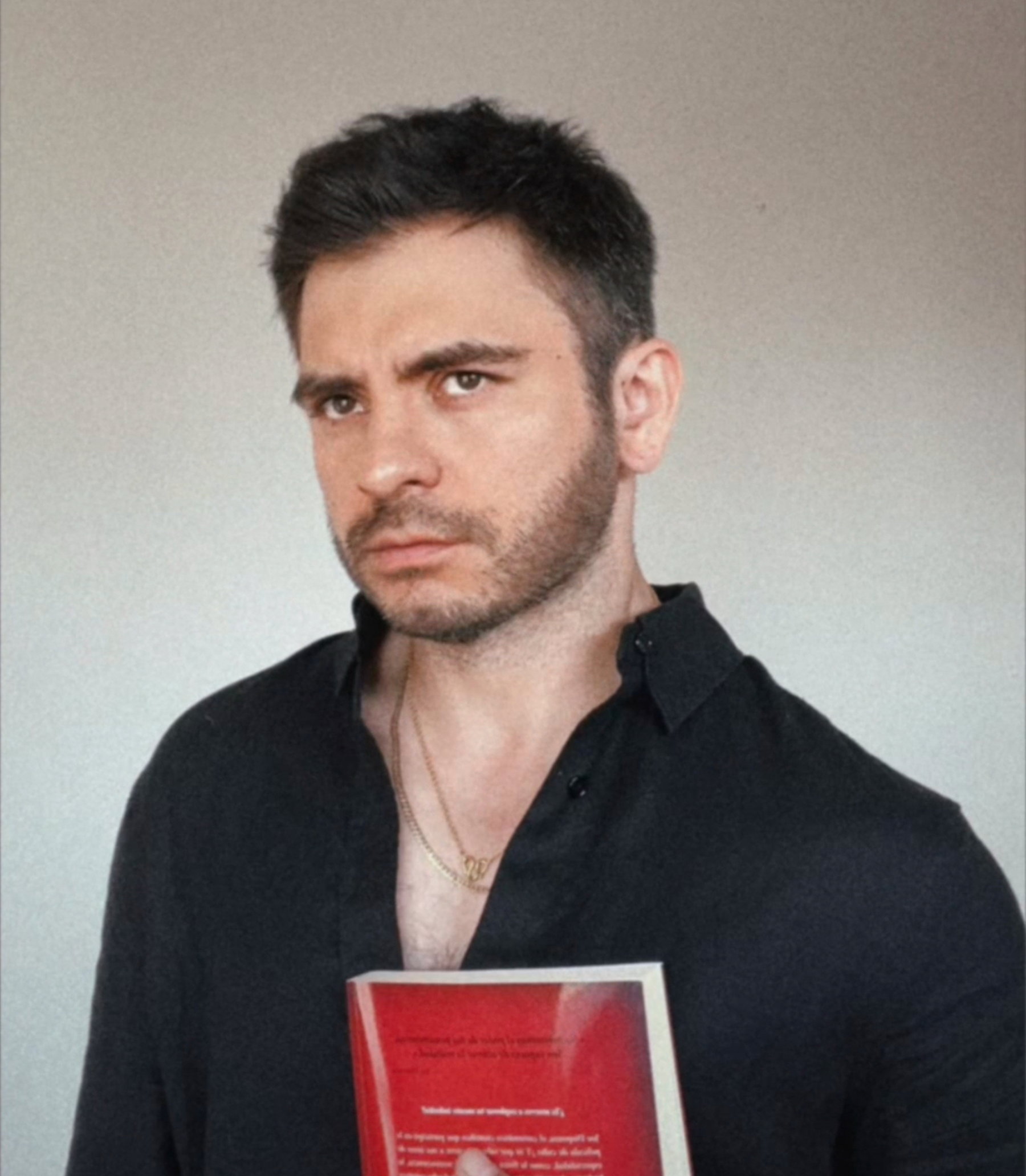
I’m currently reading Breaking the Habit of Being Yourself by Dr. Joe Dispenza. I’m not searching for formulas or instant revelations, yet something in his pages made me stop. Not so much because of what he states, but because of the questions he leaves suspended—pieces that no longer fit the puzzle of who I thought I was. One of those questions struck me: What does my inner world look like when no one is watching?
I’m not talking about what I project or share. I’m talking about the things I think in silence. The feelings I haven’t dared to name. The beliefs I carry—or at least, the ones I’ve never dared to stop believing.
✅ The Invisible Architecture of the Everyday
Dispenza proposes that our thoughts and emotions shape not only our perception, but our biology, our relationships, even our opportunities. If that’s true—and I suspect it partly is—then perhaps the external world is nothing more than an extension of our internal one.
And if that internal world has been shaped by inherited beliefs—familial, religious, cultural, or educational—many of them unquestioned or outdated, then… how much of what I live truly originates from me?
How many of my decisions are born from genuine will—and how many are echoes of someone else’s? How many “yeses” have I said out of fear, and how many “nos” out of habit? To what extent are our desires truly chosen… or simply learned?
We often equate thinking with freedom. But if we never question the origin of our thoughts, what we call freedom might be nothing more than a more sophisticated form of obedience.
✅ Beliefs Are Not Wisdom. They Are Structured Comfort.
Beliefs rarely stem from free thought—they grow from the fear of dismantling what we’ve inherited. They arrive cloaked in common sense, affection, prudence. But at their core, they are shortcuts: emotional formulas that simplify the complex.
The most persistent beliefs aren’t the truest, but the most comforting:
“Everything happens for a reason.” “Patience is always rewarded.” “What’s meant for you will find its way.”
Soft phrases, almost maternal in tone. But comfort can also paralyze. Because not everything comes on its own. Not everything waits for you.
And not everything that hurts will heal on its own. Sometimes, it must be broken.
Thinking for oneself isn’t rebellion—it’s responsibility. And sometimes, freedom begins the moment a belief stops feeling comforting… and starts sounding suspicious.
✅ The Cost of Breaking Inheritance
To question a belief isn’t just a mental exercise. It’s a rupture. And all rupture hurts—not because of what it dismantles, but because of what it threatens: our sense of belonging.
Because more than truths, what we often inherit are loyalties.
To a mother who believed that silence was wisdom.
To a father who worked himself sick and still said he was fine.
To a faith that confused desire with guilt.
To a system that rewarded those who obeyed without nuance.
Challenging these ideas doesn’t hurt because they’re false. It hurts because in doing so, we feel like we’re betraying something—or someone. A voice. A memory. A past.
And yet, growing doesn’t always feel like progressing. Sometimes it feels like drifting away. From what others expected of you. From who you thought you needed to be. From the phrases you repeated just to belong. From the silences you learned to keep.
Not everything inherited is wise. Not everything learned deserves to stay. But admitting that isn’t easy. The discomfort doesn’t come from change—but from releasing the emotional permission that kept us tied to what was.
Thinking differently sounds liberating. Living it… is another story.
✅ The Courage to Redraw Yourself
Dispenza reminds us that those who change the world are rarely understood at the beginning. They’re often called mad, heretic, naïve. Not because they destroy—but because they dare to imagine something different.
This applies to the intimate as well.
Maybe I won’t change the world. But I can change the way I inhabit myself. And that, too, can be a revolution.
Because to redraw oneself is painful. It means erasing familiar contours. It means tearing down the walls that once gave you identity. Reexamining dogmas that once made you feel safe. Breaking invisible contracts with the personal history you were taught to call “you.” It means betraying past versions of yourself—even the ones that helped you survive.
And that’s why it’s so hard. Because it’s not just about evolving… it’s about letting go of the pride of having once been who you no longer wish to be.
—Do I truly believe this?
—Or have I simply heard it so many times that I learned to obey it in silence?
✨ After the Noise, the Question
I don’t have definitive answers. I’m not looking for them either.
At this point in life, I’ve learned that absolute certainties are often just elegant traps. But there is something worth examining: the way we think what we think, and the invisible scaffolding behind what we believe.
Because if we never question it, we’ll keep calling our own life a script we never wrote.
Perhaps it’s not about changing everything. But at the very least… about reviewing. Adjusting. Choosing.
Even if in silence.
Even if no one sees.
Collaborators’ Space:
Get to Know Our Partner Brands
Explore the brands that are part of this space and discover what they have to offer. Each one brings something unique, aligned with a constantly evolving lifestyle.


Not Everything Gets Published…
Some Things Are Just for the Pack 🐺
If you want even more content, don’t miss my Instagram stories. That’s where my wolf pack 🐺 gets exclusive access—things I don’t share anywhere else.
I call my community a pack because, like wolves, they are independent yet never alone. They are strategic, resilient, and move forward with determination. If that resonates with you, join the pack and follow @the_polished_gentleman